Farm journal

Notes from the field, written by whoever was standing in it.

No ghostwriters and no stock photography. Just what we are doing this month, what worked, and the things we get asked often enough to write down.

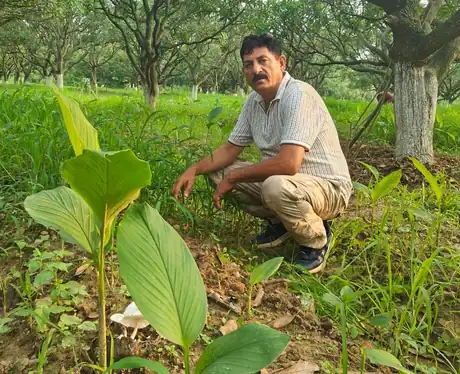
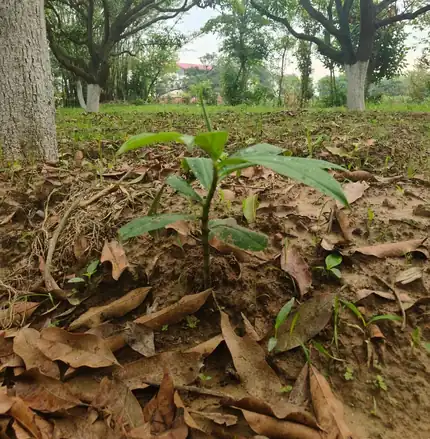
Young turmeric growing under the mango trees

FeaturedJuly 2026

Why our haldi grows in the shade of mango trees.

Turmeric is a forest-floor plant by nature. It evolved under a canopy, in cool soil, with filtered light and a steady fall of leaf litter feeding the ground.

A mango orchard is the closest thing to a forest floor we can give it. The canopy keeps the soil cooler through the worst hours of the day, and the leaf fall breaks down into exactly what the root wants. We did not invent this — our grandfather planted those trees long before any of us had an opinion about it.

More from the farm

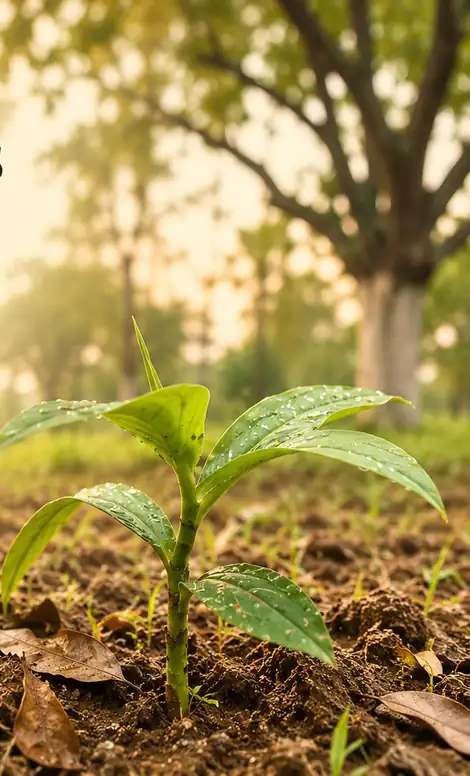
A turmeric shoot rising through mango leaf fall

The landJune 2026

Nine months, and no way to hurry it

We plant with the first proper rain and dig when the leaves have gone dry and gold. In between, the work is weeding, watching and waiting.

People ask why we cannot do two crops a year. The answer is that turmeric does not care what we want. It needs its months in the ground, and the last of them are the ones that put the colour in.

Digging early gives you weight. It does not give you curcumin, colour or aroma. So we wait, and we take the smaller harvest, and we say no to the orders we cannot fill that season.
Read the full note
A young haldi plant coming up in the soil

How we farmMay 2026

What cow dung manure actually does

It is not just a substitute for fertiliser. It rebuilds the thing fertiliser quietly spends: the soil itself.

Well-rotted cow dung from local cattle goes back into our fields every season. It feeds the soil life rather than the plant directly, which is slower and less dramatic than a bag of urea.

The difference shows up over years, not weeks. Our land still smells like earth. That is the whole test we use, and it has not failed us yet.

Read the full note
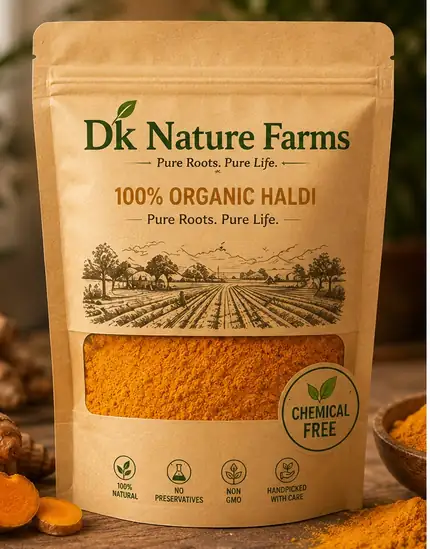
DK Nature Farms organic haldi powder pouch

Buying wellApril 2026

How to tell real haldi from the other kind

Colour that is too even, a smell that is too faint, and a price that is too good are three signs worth knowing.

Adulterated turmeric powder is common and it is not always obvious. A uniform, almost neon yellow across every batch usually means something was added to make it look that way.

Real haldi varies. Ours shifts a little between harvests, smells sharp when you open the pouch, and stains your fingers. Stir a spoon into warm water — ours settles slowly and leaves the water cloudy gold, not clear with sediment at the bottom.

Read the full note
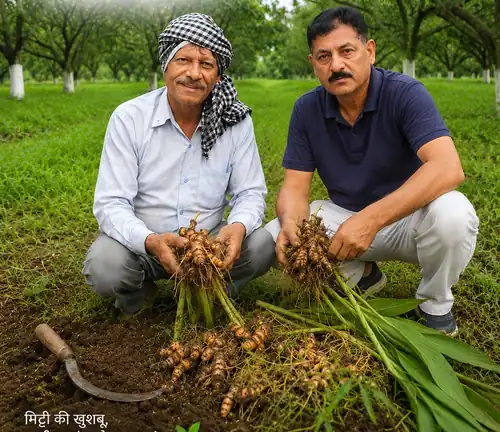
Two generations with a fresh turmeric harvest

The familyMarch 2026

The rule our elders set

If we would not eat it ourselves, it does not leave the farm. It sounds like a slogan. It started as an argument.

Our grandmother set it, and she meant it literally: the packet that goes out and the tin in our own kitchen come from the same pile. There is no second grade kept back for customers.

It costs us. Some of every harvest never gets sold. We have decided we would rather lose that than lose the only thing a new farm actually has.

Read the full note
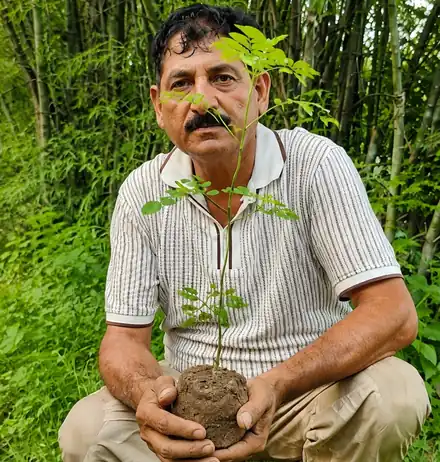
Planting a moringa sapling by hand

Coming upMarch 2026

Moringa: notes from the first season

Planted by hand, one sapling at a time, in the same untreated soil as the haldi. Here is what we have learned so far.

Moringa grows fast enough to make you overconfident. The trick is the drying — leaves left in direct sun go khaki and lose most of what people want them for.

So ours dry in shade, on racks, with air moving through. It takes longer and the yield per batch is smaller. The leaf stays green, which is the point.

Read the full note
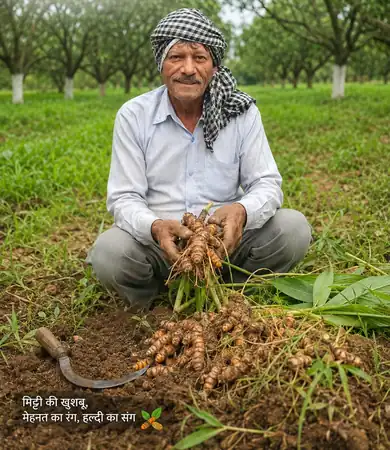
Our father holding freshly dug turmeric in the field

Straight talkFebruary 2026

Why we are not the cheapest haldi you can buy

Hand weeding costs more than spraying. Waiting costs more than digging early. We would rather explain that than quietly cut it.

Every step we have kept is a step somebody else has removed to bring a price down. Hand weeding, full maturity, slow grinding, small batches, no filler.

We sell direct, with no trader in between, and that gives some of the cost back. What is left is the real price of growing it this way. If somebody quotes you much less, it is worth asking which of those steps they skipped.

Read the full note

Ask us anything

Got a question we have not written about?

Send it across. If it is a good one it usually ends up on this page.

Call +91 78071 49747 WhatsApp us